 VapeWholesaleHub
Cappuccino Ice Age Verification at the Point of Sale — the Middle East
The most expensive cappuccino ice mistake is not paying too much per unit. It is discovering after three months that the line cannot be reordered to the same standard. Consistency is the actual product.
What Cappuccino Ice Really Costs Landed
Hold a small cappuccino ice buffer in your pricing model for currency movement. A few percent on a container is a real number, and it is easier to plan for than to absorb.
Margin on cappuccino ice is rarely lost at the till. It is lost through dead stock, returns and emergency air freight. A slightly higher landed cost with predictable lead time usually beats the cheapest quote on the spreadsheet.
Indicative reference points for planning purposes: entry tier from USD 1.42 per unit at 1000 units, mid tier at USD 0.96, and volume tier at USD 1.21 for full container quantities. These figures move with specification, packaging and freight, so treat them as a shape rather than a quote.
How Cappuccino Ice Batches Are Checked
Inspection is only useful if the result is recorded somewhere you can find it later. A cappuccino ice batch log with weights, codes and measurements turns a future complaint into a five minute lookup.
- Agree the tolerance band in writing before approving artwork.
- Confirm the current customs classification with your own broker.
- Check carton dimensions against your freight quote before confirming.
- Rotate stock by batch code rather than by delivery date.
- Keep sealed retained samples from every production batch.
Reading a Cappuccino Ice Spec Sheet
Pay attention to how a cappuccino ice supplier responds when you ask for a tolerance they do not want to commit to. The hesitation is usually more informative than the eventual answer.
Specification sheets are where a cappuccino ice deal is won or quietly lost. Two samples can look and taste the same while using different coil wire, different wicking density and different tolerances on the mouthpiece. Those details decide how the unit behaves in week three rather than minute three.
| Product category | Pod system |
|---|---|
| Resistance band | 0.8 - 1.0 ohm |
| Capacity tolerance | +/- 3% |
| Puff count method | Declared by capacity |
| Master carton | 100 units |
| Carton weight | 11.7 kg |
| Shelf life | 24 months |
| Storage | 15-25 C, dry, away from direct light |
Positioning Cappuccino Ice on Your Shelf
A tight cappuccino ice range with deep availability usually outsells a wide range with thin stock. Customers who find their line in stock come back; customers who are told to wait do not.
Logistics That Protect Margin
Carton dimensions for cappuccino ice are a design decision, not a packing afterthought. A few centimetres on the master carton can change how many units fit a pallet, and that repeats on every order.
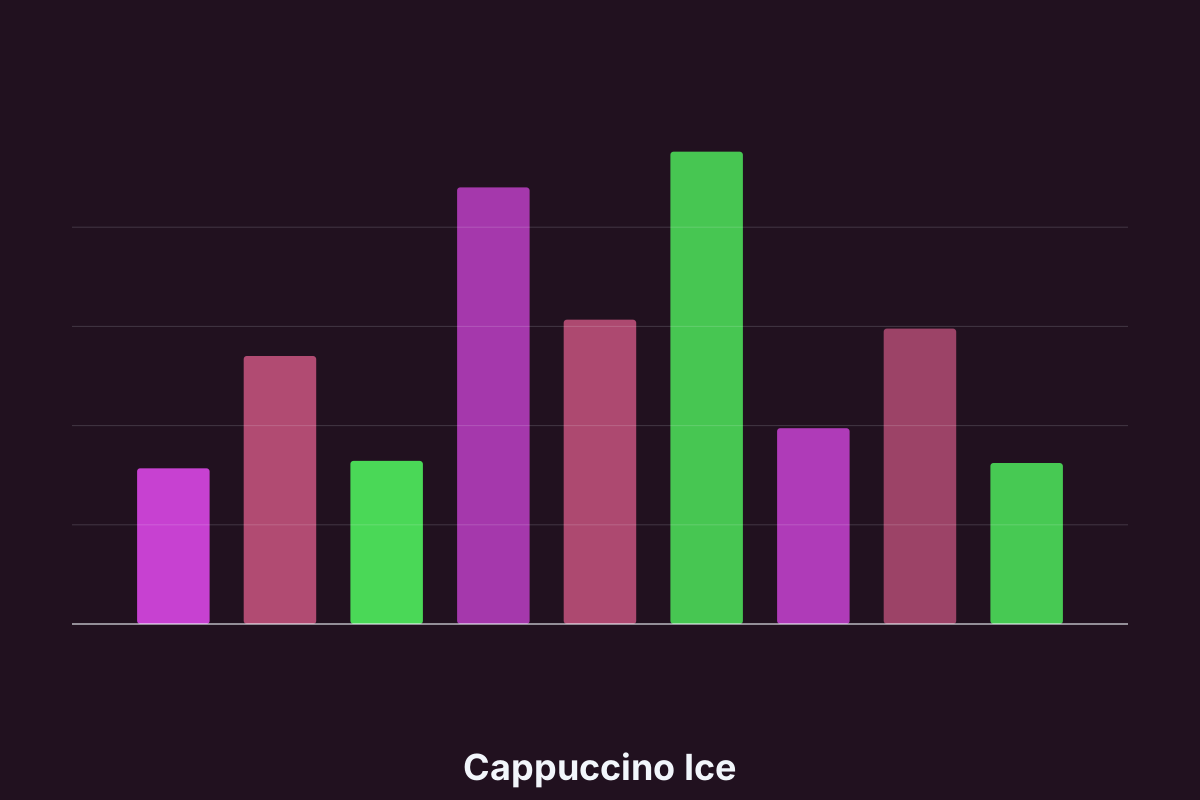
Trends Worth Watching
The cappuccino ice category is consolidating around suppliers who can document what they ship. Buyers who built that requirement into their process early are now finding it much easier to scale.
Practical Checklist
- Start with a mixed carton and let your own sell-through decide.
- Plan the switch from air to sea freight before you need it.
- Check carton dimensions against your freight quote before confirming.
- Ask how the factory measures puff count, then compare like with like.
- Confirm the current customs classification with your own broker.
- Rotate stock by batch code rather than by delivery date.
Frequently Asked Questions
Can I visit the production facility?
Yes, and we encourage it for larger programmes. Visits are most useful when you already have a draft specification, because you can then check the specific processes behind the numbers you care about.
What does a sample pack usually include?
A typical cappuccino ice sample pack covers the strengths or variants you are most likely to list, packed so you can evaluate them side by side. Tell us which lines you are considering and we will match the pack to that rather than sending a generic selection.
What information do you need to quote?
Target specification, approximate quantity, destination and any packaging requirement. With those four we can usually come back with a costed option the same working day rather than a request for more information.
How are price changes handled on repeat orders?
{K} pricing is reviewed against input costs and volume rather than adjusted casually. Any change is confirmed in writing before the next order is scheduled, with the reason stated so you can judge it yourself.
Next Step
Questions that are not answered here are usually the interesting ones. Reach out with the specifics of your market and we will answer with numbers rather than adjectives.
Related Reading
- Cappuccino Ice Handling Product Recalls Professionally — Southeast Asia
- Cappuccino Ice Last Mile Delivery for Local Retailers — Latin America
- Cappuccino Ice Damage Claims and How to Avoid Them — Plain Language
- Cappuccino Ice Insurance and Cargo Cover Explained — High Volume Buyers
- How to Choose Cappuccino Ice Without Overpaying — Busy Buyers
- Cappuccino Ice Payment Terms and Risk Management — Step by Step