 VapeWholesaleHub
Cappuccino Ice Artwork and Dieline Essentials — Entry-Level Price Points
A cappuccino ice programme fails in predictable ways: a specification nobody wrote down, a sample nobody retained, and a lead time nobody stress tested. Here is how to close those three gaps before they cost you a container.
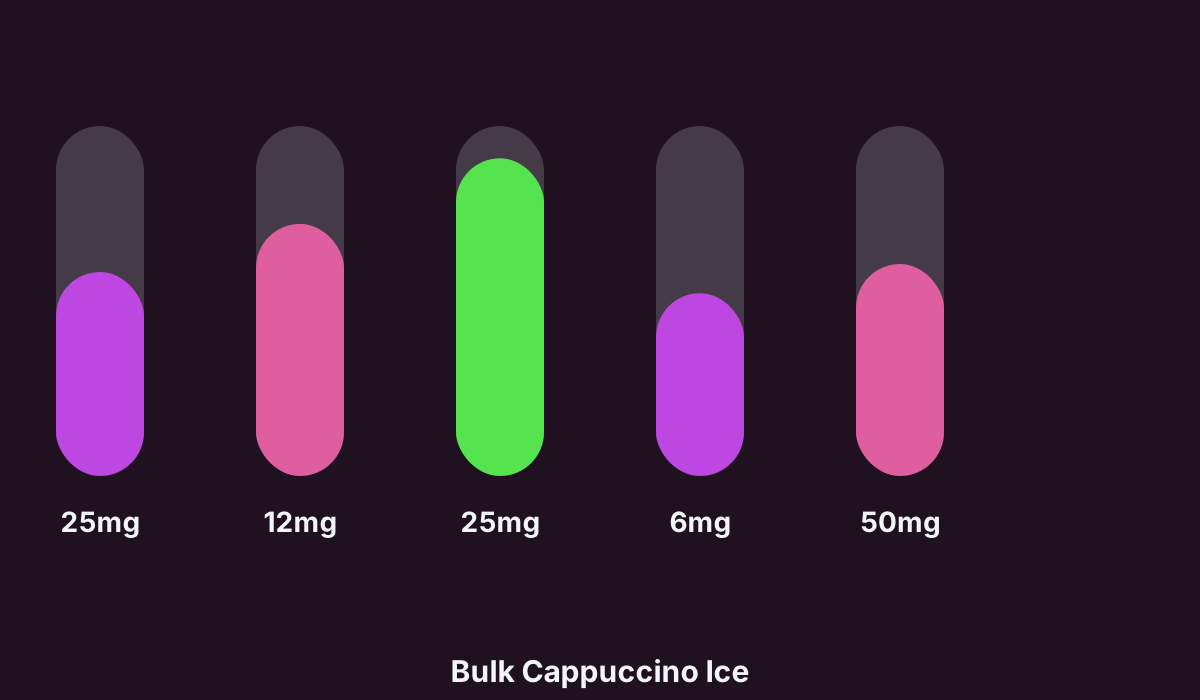
What Cappuccino Ice Really Costs Landed
The cheapest cappuccino ice quote is rarely the cheapest outcome. Add freight, defect handling, delay risk and the staff time spent chasing, then compare again. The ranking often changes.
Indicative reference points for planning purposes: entry tier from USD 1.28 per unit at 2000 units, mid tier at USD 1.76, and volume tier at USD 0.85 for full container quantities. These figures move with specification, packaging and freight, so treat them as a shape rather than a quote.
How Cappuccino Ice Batches Are Checked
Random checks are fine, but weight the sample towards the start and end of a cappuccino ice production run. Those are where a line is most likely to drift.
- Agree the tolerance band in writing before approving artwork.
- Confirm the current customs classification with your own broker.
- Write the complaint threshold into the order terms.
- Model landed cost, not ex-works price, when comparing quotes.
- Check carton dimensions against your freight quote before confirming.
Where Cappuccino Ice Sits in the Range
Think about where cappuccino ice sits in your customer's week. If it is a weekly restock, breadth matters less than availability. If it is an occasional treat, flavour range and display story carry more weight.
Category planning for cappuccino ice works best when you map it against three shopper types: the restocker who already knows what they want, the switcher who wants something stronger, and the explorer who buys on flavour name alone.
Market Signals
One visible change in cappuccino ice is the move towards clearer labelling and traceability. Retailers who adopted batch coding early are finding it much easier to work with larger distributors now.
One shift worth planning for: shorter cappuccino ice reorder cycles with smaller average drops. It favours suppliers with flexible production slots over those who only want large annual commitments.
What to Fix Before Approving Cappuccino Ice
Two specifications that matter more than buyers expect: the seal integrity after a drop test and the consistency of the draw from first use to last. Both are measurable before you commit to volume.
| Product category | Pod system |
|---|---|
| Resistance band | 1.0 - 1.2 ohm |
| Capacity tolerance | +/- 2% |
| Puff count method | Machine cycle 2s on / 18s off |
| Master carton | 200 units |
| Carton weight | 7.1 kg |
| Shelf life | 12 months |
| Storage | 15-25 C, dry, away from direct light |
Getting Cappuccino Ice to Your Warehouse
Air freight makes sense for a first cappuccino ice order when you need to test demand quickly, but almost every steady programme moves to sea freight once volumes stabilise. Planning that switch early avoids a painful margin squeeze later.
Split cappuccino ice shipments across two sailings when the order is large enough. It costs slightly more but removes the risk of a single event wiping out a full quarter of stock.

Practical Checklist
- Rotate stock by batch code rather than by delivery date.
- Start with a mixed carton and let your own sell-through decide.
- Confirm the current customs classification with your own broker.
- Model landed cost, not ex-works price, when comparing quotes.
- Plan the switch from air to sea freight before you need it.
- Ask how the factory measures puff count, then compare like with like.
Frequently Asked Questions
What does a sample pack usually include?
A typical cappuccino ice sample pack covers the strengths or variants you are most likely to list, packed so you can evaluate them side by side. Tell us which lines you are considering and we will match the pack to that rather than sending a generic selection.
Is there support for in-store material?
Yes. Shelf talkers, counter cards and simple planogram suggestions are available for cappuccino ice ranges that reach a sensible volume. Most retailers find the plain strength and flavour cards do the most work.
How are price changes handled on repeat orders?
{K} pricing is reviewed against input costs and volume rather than adjusted casually. Any change is confirmed in writing before the next order is scheduled, with the reason stated so you can judge it yourself.
What if I only need a small first order?
That is normal and sensible. A mixed carton lets you test cappuccino ice in your own market before committing to a production run, and the specification you approve at that stage carries through to larger orders unchanged.
Can you match an existing product I already sell?
Often yes, provided we can measure it properly. Send a physical sample and we will report back on what can be matched, what will differ slightly, and why. An honest gap is more useful than a vague promise.
Next Step
The best cappuccino ice programmes we see are run by buyers who write things down. Specifications, batch records, complaint thresholds - the paperwork is the advantage.
Related Reading
- Cappuccino Ice Retail Price Architecture Across Channels — a Printable Checklist
- Cappuccino Ice Finish Options and Perceived Quality — Real Numbers Only
- Cappuccino Ice Seasonal Peaks and Stock Cover — High Volume Buyers
- Cappuccino Ice Emissions and Leak Testing Methods — a Printable Checklist
- Cappuccino Ice Freight Options Compared: Air, Sea and Express — Low Minimum Quantities
- Cappuccino Ice Tooling and Moulding Cost Structures — Plain Language