 VapeWholesaleHub
Cappuccino Ice Seasonal Peaks and Stock Cover — Replenishment Cycles
Retailers rarely lose money on cappuccino ice because of price. They lose money because the first container was bought on a photograph. This page walks through what actually matters when you source cappuccino ice at scale, written from the buying desk rather than the marketing department.
Selling Cappuccino Ice at Store Level
Online, the listing for cappuccino ice should answer three questions without scrolling: what it is, how strong it is, and what it tastes like. Everything else belongs further down the page.
A cappuccino ice display that answers strength and flavour without staff involvement outsells a prettier one that does not. Most customers will not ask, so the fixture has to do the work.
What Cappuccino Ice Really Costs Landed
When you model cappuccino ice pricing, build in a realistic shrink figure. Even a well run line loses a small percentage to damage, expiry and sampling. Pretending that number is zero is how a healthy looking margin turns negative.
Indicative reference points for planning purposes: entry tier from USD 1.01 per unit at 500 units, mid tier at USD 0.81, and volume tier at USD 1.21 for full container quantities. These figures move with specification, packaging and freight, so treat them as a shape rather than a quote.
Inspection Before Dispatch
AQL sampling gets a lot of attention, but for cappuccino ice the more useful habit is simply measuring the same three things on every single batch. Trend lines catch problems that pass/fail checks miss.
Keep a photo record of every cappuccino ice approval sample. Written descriptions age badly; a dated photograph next to a delivered unit settles most arguments in seconds.
- Keep sealed retained samples from every production batch.
- Confirm the current customs classification with your own broker.
- Ask how the factory measures puff count, then compare like with like.
- Start with a mixed carton and let your own sell-through decide.
- Agree the tolerance band in writing before approving artwork.
The Specification That Matters
When we write a cappuccino ice specification with a distributor, we fix four things first: the resistance band, the liquid capacity tolerance, the puff count methodology and the packaging master carton. Everything else can flex without changing the customer experience.
| Product category | Disposable |
|---|---|
| Resistance band | 1.2 - 1.4 ohm |
| Capacity tolerance | +/- 3% |
| Puff count method | Machine cycle 3s on / 27s off |
| Master carton | 400 units |
| Carton weight | 8.4 kg |
| Shelf life | 24 months |
| Storage | 15-25 C, dry, away from direct light |
Getting Cappuccino Ice to Your Warehouse
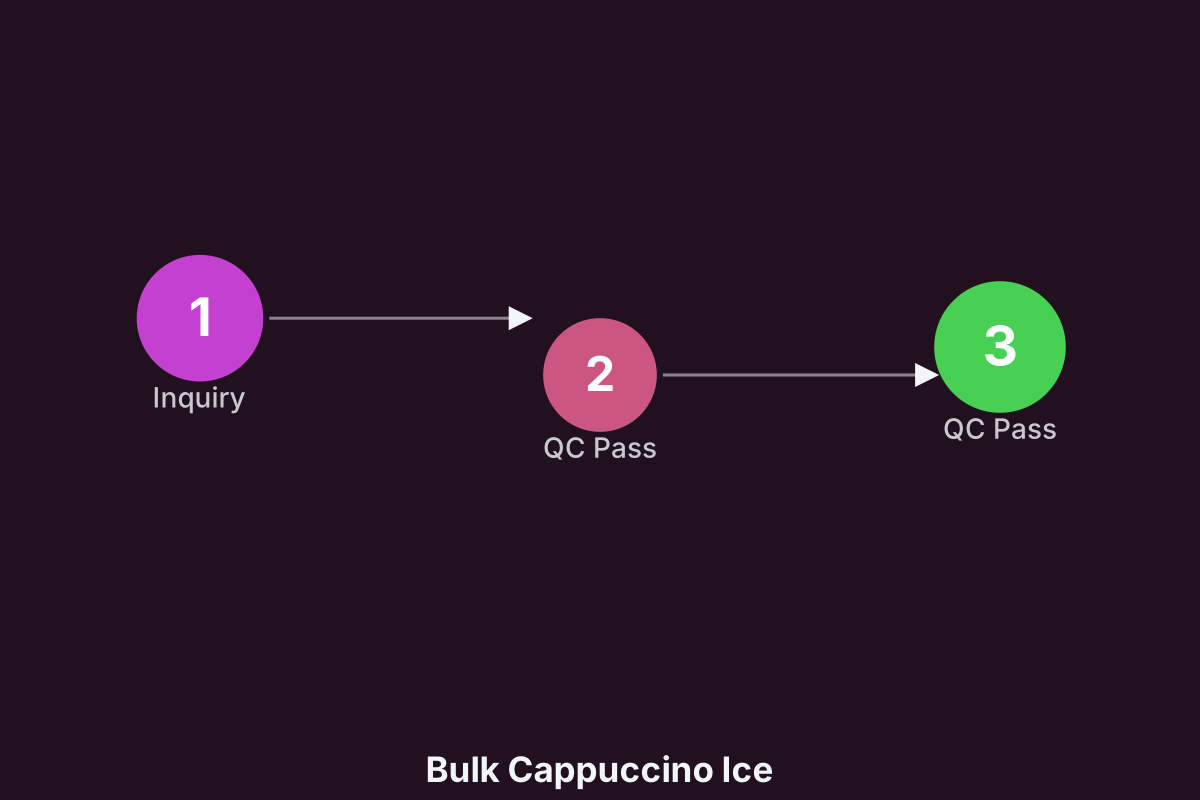
Air freight makes sense for a first cappuccino ice order when you need to test demand quickly, but almost every steady programme moves to sea freight once volumes stabilise. Planning that switch early avoids a painful margin squeeze later.
Trends Worth Watching
Traceability is moving from a nice-to-have to a requirement in several cappuccino ice markets. Building the habit now is cheaper than retrofitting record keeping under pressure later.
Assortment rationalisation is the quiet trend in this category. Shops that cut their cappuccino ice range from twelve lines to five well chosen ones often report higher total sales, not lower.
Practical Checklist
- Agree the tolerance band in writing before approving artwork.
- Check carton dimensions against your freight quote before confirming.
- Start with a mixed carton and let your own sell-through decide.
- Model landed cost, not ex-works price, when comparing quotes.
- Keep sealed retained samples from every production batch.
- Plan the switch from air to sea freight before you need it.
Frequently Asked Questions
Can I mix strengths in one order?
In most cases yes, as long as each strength meets the minimum run length. Mixed strength cartons are popular with retailers building their first display because they show the full ladder without over committing.
Can I visit the production facility?
Yes, and we encourage it for larger programmes. Visits are most useful when you already have a draft specification, because you can then check the specific processes behind the numbers you care about.
Do you provide compliance documents?
Every shipment leaves with the documentation set relevant to your market, including batch records and test reports where required. Your local rules still determine what you must file, so confirm those with your broker before import.
Is there support for in-store material?
Yes. Shelf talkers, counter cards and simple planogram suggestions are available for cappuccino ice ranges that reach a sensible volume. Most retailers find the plain strength and flavour cards do the most work.
What is the usual minimum order for cappuccino ice?
For a standard production run the minimum is normally one master carton per flavour, though mixed cartons can be arranged for a first order. If you are testing the line, ask about a sample pack first and treat the freight as part of your research budget.
Next Step
The best cappuccino ice programmes we see are run by buyers who write things down. Specifications, batch records, complaint thresholds - the paperwork is the advantage.
Related Reading
- Cappuccino Ice Market Demand: Reading the Numbers — New Distributors
- Cappuccino Ice Packaging Formats That Reduce Damage Claims — Real Numbers Only
- Building a Cappuccino Ice Catalogue Your Sales Team Can Use — Latin America
- Cappuccino Ice Monthly Review Ritual for Buyers — Tight Margin Categories
- Cappuccino Ice Cross Selling With Adjacent Categories — North America
- Cappuccino Ice Cross Selling With Adjacent Categories — Tight Margin Categories