 VapeWholesaleHub
Cappuccino Ice Shelf Life, Batch Codes and Traceability — Cash-and-Carry Formats
If you are comparing cappuccino ice suppliers right now, you are probably looking at three quotes that look identical and cost very different amounts. That gap usually comes down to cell grade, coil consistency and how honest the factory is about tolerances. Let us unpack it.
What Cappuccino Ice Really Costs Landed
The cheapest cappuccino ice quote is rarely the cheapest outcome. Add freight, defect handling, delay risk and the staff time spent chasing, then compare again. The ranking often changes.
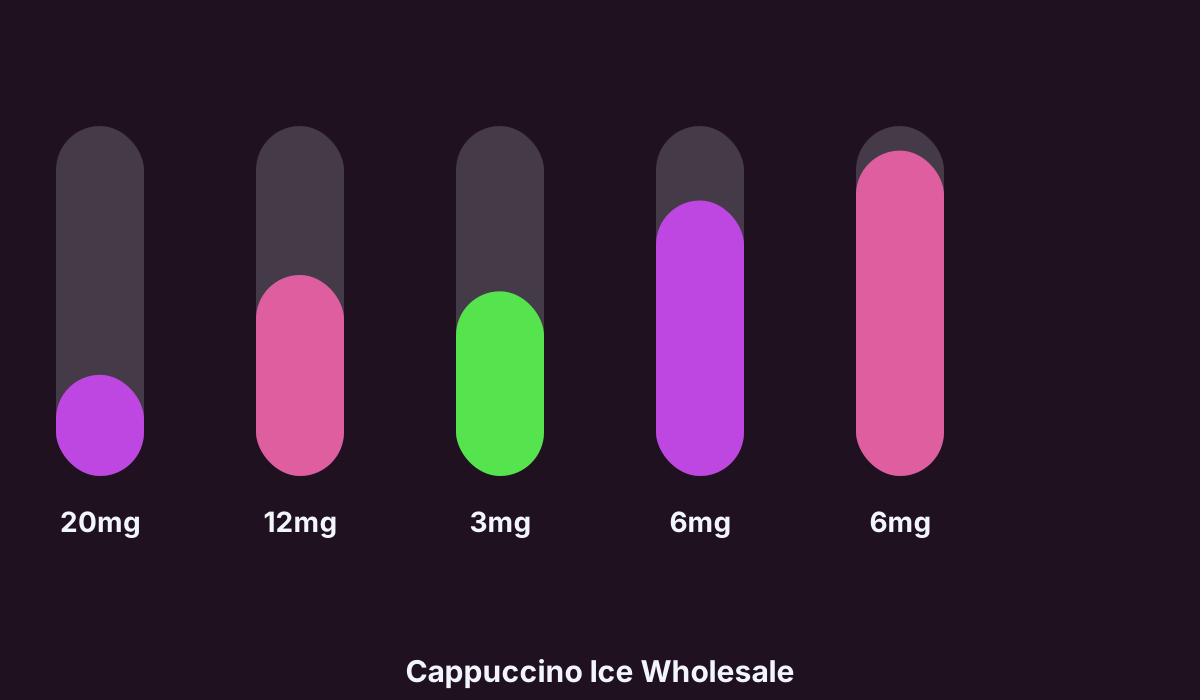
Indicative reference points for planning purposes: entry tier from USD 1.62 per unit at 1000 units, mid tier at USD 1.66, and volume tier at USD 0.93 for full container quantities. These figures move with specification, packaging and freight, so treat them as a shape rather than a quote.
Where Cappuccino Ice Sits in the Range
Before anything else, decide which customer you are buying cappuccino ice for. A convenience counter with limited shelf depth needs a tight range that turns quickly, while a specialist shop can carry a deeper ladder of options and educate buyers into higher ticket lines.
A tight cappuccino ice range with deep availability usually outsells a wide range with thin stock. Customers who find their line in stock come back; customers who are told to wait do not.
How Cappuccino Ice Batches Are Checked
The defect rate that matters is the one your customer experiences, not the one the factory reports. Bridge that gap by inspecting the way a customer would open the box, not the way a line worker packs it.
- Plan the switch from air to sea freight before you need it.
- Ask how the factory measures puff count, then compare like with like.
- Start with a mixed carton and let your own sell-through decide.
- Confirm the current customs classification with your own broker.
- Check carton dimensions against your freight quote before confirming.
Reading a Cappuccino Ice Spec Sheet
Specification sheets are where a cappuccino ice deal is won or quietly lost. Two samples can look and taste the same while using different coil wire, different wicking density and different tolerances on the mouthpiece. Those details decide how the unit behaves in week three rather than minute three.
Ask any factory for the same cappuccino ice sample twice, three months apart. If the second sample drifts, the production line is running without statistical control and your reviews will drift with it. Consistency over time is a more useful signal than a single good sample.
| Product category | Accessory |
|---|---|
| Resistance band | 1.0 - 1.2 ohm |
| Capacity tolerance | +/- 3% |
| Puff count method | Machine cycle 2s on / 18s off |
| Master carton | 240 units |
| Carton weight | 9.1 kg |
| Shelf life | 24 months |
| Storage | 15-25 C, dry, away from direct light |
Selling Cappuccino Ice at Store Level
Use your cappuccino ice staff training time on the two questions customers actually ask. Anything more detailed gets forgotten by the second shift.
Keep the cappuccino ice range tidy. A half empty shelf reads as a dying line, and customers interpret it that way faster than any signage can correct.
Trends Worth Watching
The most durable cappuccino ice lines over the last few years have been unglamorous and consistent. Novelty sells once; reliability sells every month.

Practical Checklist
- Plan the switch from air to sea freight before you need it.
- Model landed cost, not ex-works price, when comparing quotes.
- Confirm the current customs classification with your own broker.
- Write the complaint threshold into the order terms.
- Check carton dimensions against your freight quote before confirming.
- Start with a mixed carton and let your own sell-through decide.
Frequently Asked Questions
What if a batch does not match the sample?
Keep the retained samples from the approval stage. If a delivered batch measurably differs, we compare against the retained set and resolve it against the production record. This is why we insist on sealed retained units from every run.
How do you handle a short shipment?
Cartons are counted and weighed before dispatch and the figures are shared with you. If something is short on arrival, the packing record and the carrier documentation are both available, which keeps the claim straightforward.
Can the packaging be customised?
Yes. Most cappuccino ice programmes use private label packaging once volumes justify the printing plate. We supply dielines, check your artwork for print issues and hold approved files so reorders need no new setup.
Do you provide compliance documents?
Every shipment leaves with the documentation set relevant to your market, including batch records and test reports where required. Your local rules still determine what you must file, so confirm those with your broker before import.
Next Step
Whatever you decide, decide it against numbers you can check on arrival. That single discipline removes most of the risk from importing cappuccino ice.
Related Reading
- Testing Cappuccino Ice Consistency Across Three Batches — Low Minimum Quantities
- Setting Minimum Order Quantities for Cappuccino Ice — Convenience Retail
- Merchandising Cappuccino Ice Inside a Physical Store — Three Price Tiers
- Private Label Cappuccino Ice: Steps From Idea to Carton — Cross-Border Trade
- Cappuccino Ice Specifications Every Buyer Should Check — 2026 Buyer Notes
- Cappuccino Ice Review Mining for Product Insight — Private Label Programmes