 VapeWholesaleHub
Comparing Cappuccino Ice Factory Tiers and What You Get — EU Markets
There is no clever trick to buying cappuccino ice well. There is a short list of things worth checking and a long list of things that distract from them. This page is an attempt at the short list.
Merchandising and Listing Tips
A cappuccino ice display that answers strength and flavour without staff involvement outsells a prettier one that does not. Most customers will not ask, so the fixture has to do the work.
How Cappuccino Ice Batches Are Checked
Random checks are fine, but weight the sample towards the start and end of a cappuccino ice production run. Those are where a line is most likely to drift.
The cheapest quality control step is a retained sample. Keeping three sealed units from every cappuccino ice batch costs almost nothing and turns any dispute into a simple comparison instead of an argument over photographs.
- Write the complaint threshold into the order terms.
- Model landed cost, not ex-works price, when comparing quotes.
- Check carton dimensions against your freight quote before confirming.
- Plan the switch from air to sea freight before you need it.
- Ask how the factory measures puff count, then compare like with like.
How Cappuccino Ice Fits the Assortment
One useful exercise: list every cappuccino ice line you stock and mark the last date each one sold at full price. Anything without a recent full price sale is taking space from something that would use it better.
What Cappuccino Ice Really Costs Landed
When you model cappuccino ice pricing, build in a realistic shrink figure. Even a well run line loses a small percentage to damage, expiry and sampling. Pretending that number is zero is how a healthy looking margin turns negative.
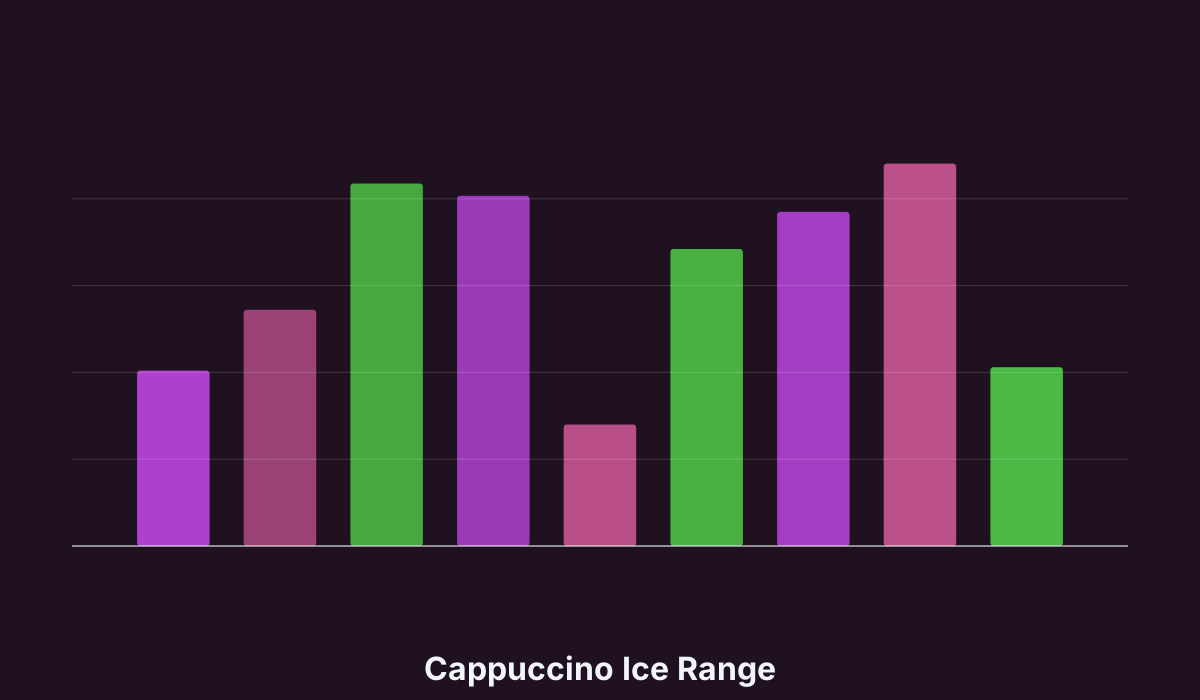
Indicative reference points for planning purposes: entry tier from USD 1.27 per unit at 500 units, mid tier at USD 1.17, and volume tier at USD 1.46 for full container quantities. These figures move with specification, packaging and freight, so treat them as a shape rather than a quote.
What to Fix Before Approving Cappuccino Ice
Revisit the cappuccino ice specification after every third order. Small improvements compound, and factories take a buyer more seriously when the document has clearly been used.
| Product category | Disposable |
|---|---|
| Resistance band | 1.0 - 1.2 ohm |
| Capacity tolerance | +/- 2% |
| Puff count method | Machine cycle 2s on / 18s off |
| Master carton | 400 units |
| Carton weight | 3.5 kg |
| Shelf life | 18 months |
| Storage | 15-25 C, dry, away from direct light |
Trends Worth Watching
One visible change in cappuccino ice is the move towards clearer labelling and traceability. Retailers who adopted batch coding early are finding it much easier to work with larger distributors now.

Practical Checklist
- Write the complaint threshold into the order terms.
- Model landed cost, not ex-works price, when comparing quotes.
- Confirm the current customs classification with your own broker.
- Ask how the factory measures puff count, then compare like with like.
- Start with a mixed carton and let your own sell-through decide.
- Agree the tolerance band in writing before approving artwork.
Frequently Asked Questions
What if I only need a small first order?
That is normal and sensible. A mixed carton lets you test cappuccino ice in your own market before committing to a production run, and the specification you approve at that stage carries through to larger orders unchanged.
Do you provide compliance documents?
Every shipment leaves with the documentation set relevant to your market, including batch records and test reports where required. Your local rules still determine what you must file, so confirm those with your broker before import.
How should cappuccino ice be stored?
Cool, dry and out of direct sunlight. Heat and light are the two things that shorten shelf life fastest. Rotate stock by batch code rather than by arrival date, and keep cartons off concrete floors in humid warehouses.
Can I mix strengths in one order?
In most cases yes, as long as each strength meets the minimum run length. Mixed strength cartons are popular with retailers building their first display because they show the full ladder without over committing.
Do you hold stock for regular customers?
For established programmes we can reserve production slots and, in some cases, hold finished cappuccino ice stock against a forecast. It removes most of the lead time risk from a reorder and is worth discussing once volumes are stable.
Next Step
The best cappuccino ice programmes we see are run by buyers who write things down. Specifications, batch records, complaint thresholds - the paperwork is the advantage.
Related Reading
- Setting Minimum Order Quantities for Cappuccino Ice — Step by Step
- Understanding Cappuccino Ice Manufacturing From the Inside — New Distributors
- Cappuccino Ice Working With a Local Compliance Partner — New Distributors
- Cappuccino Ice Freight Forwarder Selection Notes — Container-Scale Orders
- Digital Marketing Playbook for Cappuccino Ice Sellers — UK and Ireland
- Cappuccino Ice Sampling Programme: How to Evaluate Before You Commit — Seasonal Demand Peaks