 VapeWholesaleHub
Digital Marketing Playbook for Cappuccino Ice Sellers — Cash-and-Carry Formats
Most first time importers of cappuccino ice ask the same five questions. This page answers them in the order they usually arrive, with the numbers we quote internally rather than round marketing claims.
Inspection Before Dispatch
AQL sampling gets a lot of attention, but for cappuccino ice the more useful habit is simply measuring the same three things on every single batch. Trend lines catch problems that pass/fail checks miss.
- Ask how the factory measures puff count, then compare like with like.
- Check carton dimensions against your freight quote before confirming.
- Confirm the current customs classification with your own broker.
- Start with a mixed carton and let your own sell-through decide.
- Rotate stock by batch code rather than by delivery date.
Turning Cappuccino Ice Into Repeats
On shelf, cappuccino ice sells on clarity. A plain shelf talker that states strength and flavour in two words outperforms a beautifully designed but vague display, because most purchase decisions here take under ten seconds.
Positioning Cappuccino Ice on Your Shelf
Category data for cappuccino ice is noisier than it looks. Promotions, weather and local competition all move weekly numbers, so read three months at a time rather than reacting to a single week.
Freight, Customs and Timing
Freight is the hidden half of cappuccino ice unit economics. A denser master carton can save more per unit than a hard negotiation on factory price, because the saving repeats on every reorder rather than once.
Where Demand Is Heading
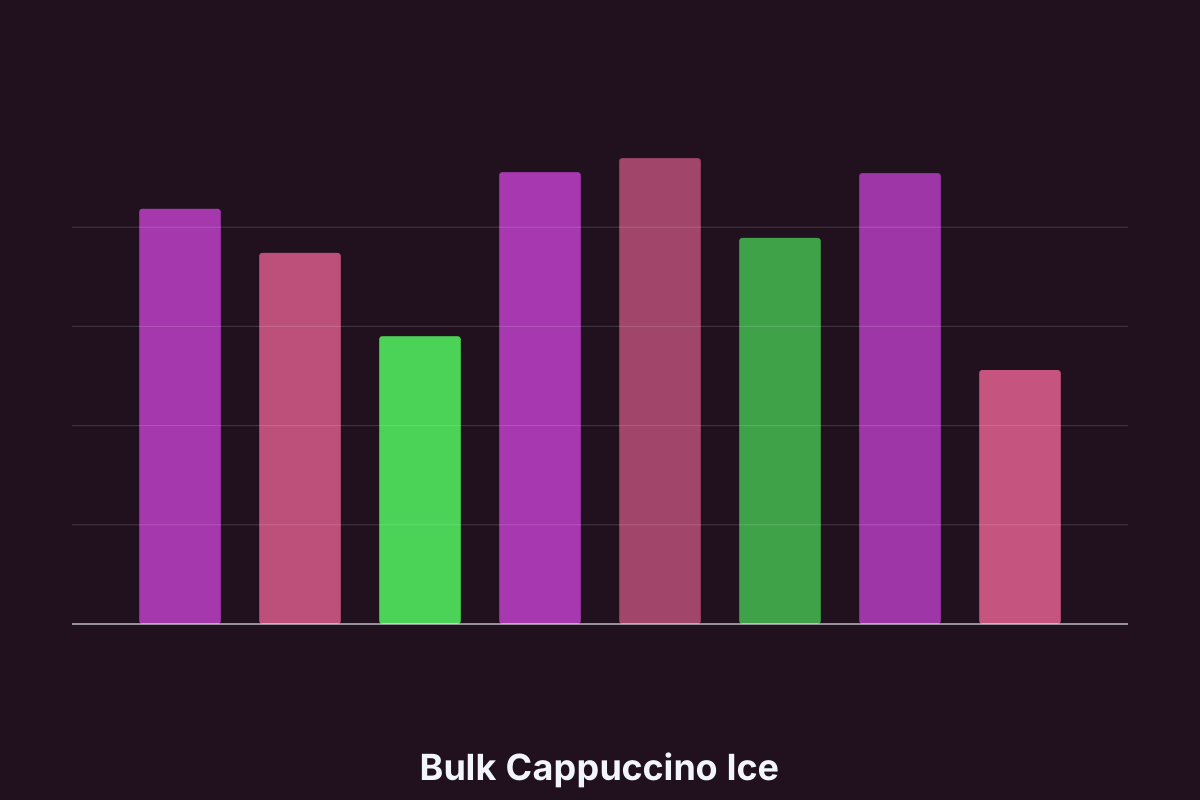
Assortment rationalisation is the quiet trend in this category. Shops that cut their cappuccino ice range from twelve lines to five well chosen ones often report higher total sales, not lower.
Modelling a Healthy Margin
Margin on cappuccino ice is rarely lost at the till. It is lost through dead stock, returns and emergency air freight. A slightly higher landed cost with predictable lead time usually beats the cheapest quote on the spreadsheet.
Margin on cappuccino ice is rarely lost at the till. It is lost through dead stock, returns and emergency air freight. A slightly higher landed cost with predictable lead time usually beats the cheapest quote on the spreadsheet.
Indicative reference points for planning purposes: entry tier from USD 2.02 per unit at 500 units, mid tier at USD 1.67, and volume tier at USD 1.46 for full container quantities. These figures move with specification, packaging and freight, so treat them as a shape rather than a quote.
Practical Checklist
- Ask how the factory measures puff count, then compare like with like.
- Start with a mixed carton and let your own sell-through decide.
- Write the complaint threshold into the order terms.
- Check carton dimensions against your freight quote before confirming.
- Plan the switch from air to sea freight before you need it.
- Model landed cost, not ex-works price, when comparing quotes.
Frequently Asked Questions
What if I only need a small first order?
That is normal and sensible. A mixed carton lets you test cappuccino ice in your own market before committing to a production run, and the specification you approve at that stage carries through to larger orders unchanged.
What does a sample pack usually include?
A typical cappuccino ice sample pack covers the strengths or variants you are most likely to list, packed so you can evaluate them side by side. Tell us which lines you are considering and we will match the pack to that rather than sending a generic selection.
What if a batch does not match the sample?
Keep the retained samples from the approval stage. If a delivered batch measurably differs, we compare against the retained set and resolve it against the production record. This is why we insist on sealed retained units from every run.
How are price changes handled on repeat orders?
{K} pricing is reviewed against input costs and volume rather than adjusted casually. Any change is confirmed in writing before the next order is scheduled, with the reason stated so you can judge it yourself.
What happens if my market changes its rules?
Regulations move, and packaging or documentation sometimes has to follow. We keep approved artwork files on hand so that a required change is a reprint rather than a redesign, which keeps the cost and delay down.
Next Step
Send us your current cappuccino ice specification even if you are not planning to move suppliers. A second read of a document you use every month is usually worth the ten minutes.
Related Reading
- Cappuccino Ice Specification Change Control — Small Batch Buyers
- Cappuccino Ice Finish Options and Perceived Quality — Repeat Orders
- Cappuccino Ice Counterfeit Risk and Serialisation — Real Numbers Only
- Cappuccino Ice Warranty Claims Workflow — Updated for 2026
- Pricing Cappuccino Ice for Healthy Retail Margins — New Distributors
- Cappuccino Ice Specification Change Control — Multi-Warehouse Networks